

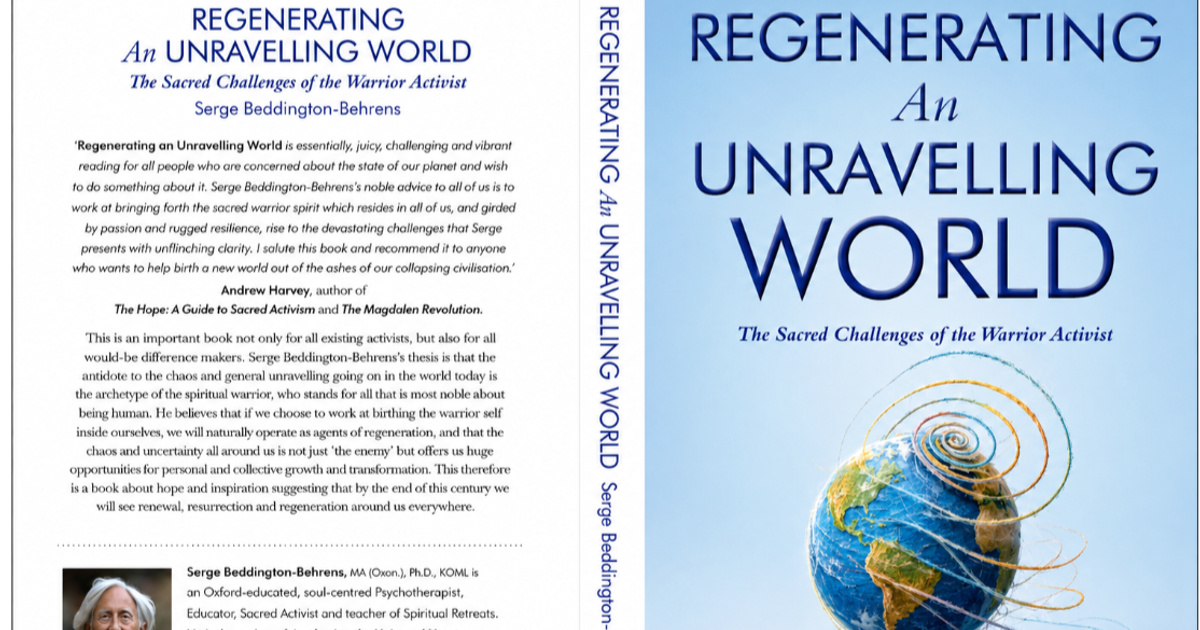
The contemporary landscape is defined by a seemingly endless cycle of political instability, environmental decay, and social division. While many observers identify these issues as the primary ailments of our civilization, author and psychotherapist Serge Beddington-Behrens offers a more foundational diagnosis. In his latest work, ‘Can a Sacred Activist Change the World? New Book Challenges Readers to Confront Today’s Greatest Crises with Courage, Compassion and Action’, he posits that humanity’s greatest crisis is the profound loss of the human soul. This essential inquiry forms the backbone of his exploration into what it means to lead a purposeful life in an era of global uncertainty.
Throughout the pages of ‘Can a Sacred Activist Change the World? New Book Challenges Readers to Confront Today’s Greatest Crises with Courage, Compassion and Action’, the author presents a framework that transcends the typical boundaries between spiritual reflection and political engagement. Beddington-Behrens argues that systemic change cannot be delegated to traditional political leadership. Instead, the burden—and the opportunity—rests with the individual. By bridging the gap between psychology and active social responsibility, he invites readers to step into the role of the Sacred Activist.
Reflecting on the underlying causes of modern conflict, Beddington-Behrens notes, “The crises in our world today are all crises resulting from a lack of soul. Soul needs to return to the world.” Rather than viewing the current decline of traditional systems with nihilism, he frames this period as a necessary transition. The dissolution of outdated structures provides a space for a more conscious and compassionate paradigm to take root. He suggests that we are at a pivotal moment where personal transformation is the direct prerequisite for collective survival.
Drawing upon over fifty years of experience as a teacher and spiritual guide, Beddington-Behrens pulls from diverse historical lineages—including the discipline of the Samurai, the teachings of Zen Buddhism, and the archetypal integrity of King Arthur’s Knights of the Round Table. He recontextualizes the role of the Sacred Warrior for the modern day, emphasizing that one must actively stand for their values to prevent the erosion of democracy. For those looking to navigate the complexities of our time, ‘Can a Sacred Activist Change the World? New Book Challenges Readers to Confront Today’s Greatest Crises with Courage, Compassion and Action’ serves as both a meditation on our current failings and a manual for constructive, soul-led participation in the restoration of our global community.