
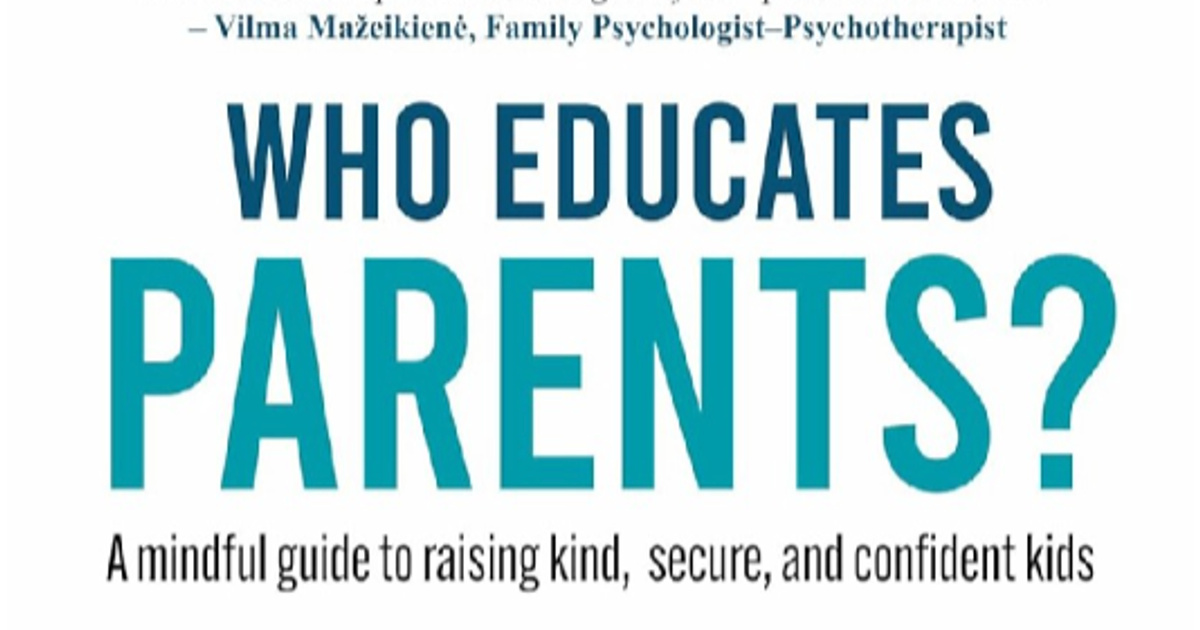
The landscape of contemporary parenting literature is frequently saturated with rigid formulas and prescriptive expert advice. However, a significant new entry into this space, ‘Who Educates Parents? Challenges Traditional Parenting Advice with a Refreshingly Honest Family Perspective’, offers a stark departure from conventional child-rearing manuals. Authored by Dr. Žilvinas Svigaris in collaboration with his own family, the publication introduces a transformative dialogue regarding the reciprocal nature of upbringing in an era defined by rapid societal change.
At the heart of the project is the provocative inquiry: ‘Who teaches parents how to become parents?’ Moving away from the traditional hierarchical model where knowledge flows exclusively from adult to child, the work posits that children act as educators for their parents just as frequently as they are mentored. This perspective is cultivated from over twenty years of direct experience, blending philosophical inquiry with raw, personal narrative. By integrating the direct contributions and distinct memories of his children, Dr. Žilvinas Svigaris creates an authentic discourse that illustrates how disparate recollections of shared events can foster deeper emotional understanding.
Throughout the pages of ‘Who Educates Parents? Challenges Traditional Parenting Advice with a Refreshingly Honest Family Perspective’, the author navigates a wide spectrum of essential themes. These include effective communication strategies, the navigate-able complexities of adolescence, the nuances of modern schooling, and the developmental importance of creativity and learning through music. Rather than offering a universal roadmap, the text emphasizes that the most resilient family units are forged through mutual trust, ongoing dialogue, and a fundamental commitment to respect over mere authority. This collaborative release serves as a necessary provocation for families to rethink their domestic structures and embrace continuous, mutual growth in preparation for an uncertain future.